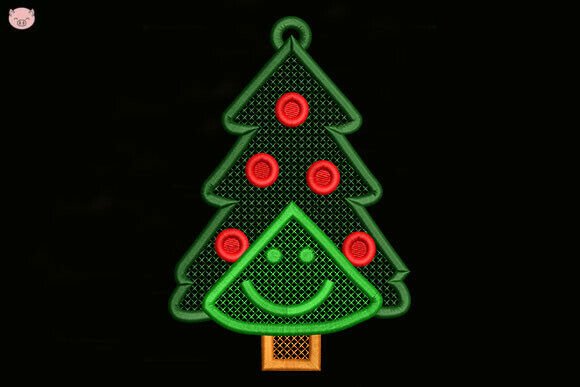
Earring Christmas Tree Embroidery Review
As a designer who has spent years testing digital assets for both personal craft projects and commercial production, I approach every new file with a mix of excitement and skepticism. The holiday season is a critical revenue window for Etsy sellers and small shop owners, but the quality of the finished product is what separates a one-time purchase from a loyal customer base. Today, I am evaluating the Earring Christmas Tree Embroidery design to see if it holds up under the scrutiny of real-world stitching.
First Impressions: Mood and Visual Personality
When I first loaded the Earring Christmas Tree Embroidery into my digitizing software, the immediate impression was one of delicate charm. Unlike the heavy, blocky trees often seen in generic holiday collections, this design leans towards a whimsical, accessory-focused aesthetic. The layout suggests a vertical orientation that is perfectly scaled for smaller applications. It does not scream "festive giant," but rather whispers "elegant detail."
The visual personality of this design feels tailored for high-end handmade products. It avoids the cluttered look that plagues many low-quality files where stitch density is too high for intricate details. Instead, the lines appear clean, suggesting a balance between satin stitch for definition and fill stitch for texture. For a crafter looking to elevate their brand consistency, this type of refined imagery is essential. It signals to the buyer that the item is a thoughtful, personalized gift rather than mass-produced merchandise.
Testing the Design on Real Projects
To truly understand the potential of the Earring Christmas Tree Embroidery, I simulated its application on a few specific items common in the craft business. Imagine preparing a custom embroidered tote bag or a high-quality sweatshirt for a boutique holiday collection. In these scenarios, the design's scale becomes its greatest asset.
On a canvas tote bag, the tree would serve as a perfect focal point near the top corner, adding a touch of seasonal flair without overwhelming the fabric. The design's proportions seem ideal for sweatshirt embroidery as well, particularly when placed on the chest pocket area or as a small motif on the sleeve. Because the design is named "Earring," it inherently suggests a miniature scale, which translates beautifully to embroidered patch creation. These patches could be sold individually or attached to denim jackets and backpacks, offering a versatile digital product option for online sellers.
I also considered its use in baby embroidery. A tiny, tasteful tree on a onesie or a nursery blanket cover offers a soft, non-intrusive holiday theme. Parents often prefer subtle designs over loud graphics for infant wear, making this file a strong contender for the baby market. The clarity of the lines ensures that even on softer fabrics, the image remains recognizable and professional.
Performance on Different Fabrics
The versatility of an embroidery file is tested by how it reacts to different materials. Here is where practical judgment comes into play. While the Earring Christmas Tree Embroidery looks promising, its success depends heavily on the substrate.
- Stable Fabrics: On woven cottons like tea towels or pillow covers, the design should perform excellently. The structure of the fabric supports the needle penetration, allowing the thread colors to pop without distortion.
- Stretchy Knits: If you are using this for custom apparel made of jersey or fleece, you must be cautious. Stretchy fabric can warp the shape of the tree during stitching. A heavy-duty stabilizer is non-negotiable here to maintain the integrity of the design.
- Textured Surfaces: Thick textures like corduroy or heavy wool can sometimes obscure fine details. Since this design appears to have delicate elements, test it on scrap fabric first to ensure the running stitch details do not get lost in the weave.
Critical Considerations for Professional Use
Before integrating the Earring Christmas Tree Embroidery into your commercial workflow, there are several technical factors to review. As a reviewer, I always advise checking the hoop size requirements against your machine capabilities. While the name implies a small footprint, you need to confirm the actual dimensions to ensure it fits within your smallest hoop without crowding.
Stitch Density is another vital metric. High-density areas can cause puckering, especially on thin fabrics like silk or light linen. If the design features dense fill stitches, you may need to reduce the pull compensation or adjust the tension settings on your machine. Conversely, if the density is too low, the backing might show through, ruining the professional finish of your finished product.
Color selection is equally important. Holiday themes often rely on traditional reds and greens, but this design might shine with unexpected thread colors. Try a metallic gold or a deep navy blue to create a modern, sophisticated look that stands out in a crowded marketplace. Always test the design on dark fabric backgrounds as well; a white outline or lighter thread might be necessary to ensure visibility.
Avoiding Common Pitfalls
There are specific situations where this design requires extra care. Avoid using it on curved surfaces like caps unless you have significant experience with 3D hooping. The curves can distort the straight lines of the tree, leading to a messy appearance. Similarly, if you plan to sell these as part of a line requiring frequent washing, ensure the thread is high-quality polyester or rayon to prevent fading.
For those creating printable mockups to sell the digital file itself, accuracy is key. Ensure your previews accurately represent the stitch direction and color palette so buyers know exactly what they are purchasing. Misleading images can lead to negative reviews and damage your reputation as a reliable digital product seller.
Final Verdict for Craft Entrepreneurs
The Earring Christmas Tree Embroidery design offers a fresh take on holiday motifs, moving away from the clichéd and towards the curated. It is an excellent choice for designers looking to add value to their handmade product lines without sacrificing quality. Whether you are a hobbyist making gifts for family or a small shop owner scaling up for the holidays, this file provides a solid foundation for professional results.
However, remember that the best machine embroidery design is only as good as the execution. Always run a test on scrap fabric, verify your stabilizer choices, and double-check the licensing terms before selling finished items. By treating this embroidery project with the attention it deserves, you can create holiday goods that customers will cherish and return to year after year.