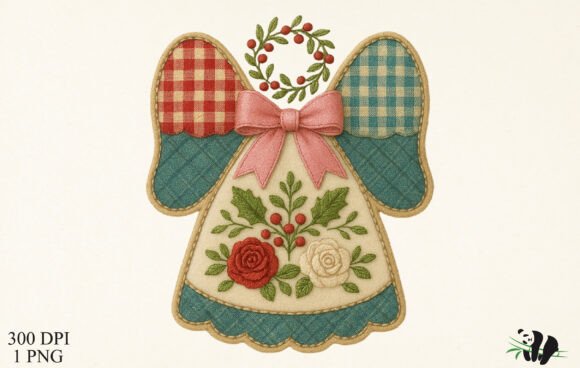
Faux Embroidery Patchwork Angel Wings Review
As a professional embroidery designer who has spent years translating digital concepts into tangible thread, I approach every new digital embroidery file with a critical eye. The market is flooded with generic assets, but finding a design that truly elevates small business merch requires looking beyond the surface. Today, I am reviewing the Faux Embroidery Patchwork Angel Wings, a graphic asset marketed as a high-resolution PNG file. My goal is to determine if this specific design holds up under the scrutiny of commercial production for branded patches, staff uniforms, and boutique merchandise.
First Impressions: Visual Personality and Brand Fit
When I first opened the preview for Faux Embroidery Patchwork Angel Wings, the immediate impression was one of rustic elegance mixed with modern playfulness. The "faux" aspect suggests a texture that mimics traditional stitching without the physical limitations of actual thread density in a print format. For a small café, a handmade soap brand, or a local florist, this aesthetic strikes a perfect balance. It feels friendly yet premium, avoiding the overly polished look of corporate vector art while maintaining enough structure to look professional on custom apparel.
The patchwork style implies a story of craftsmanship. In an era where customers crave authenticity, this design asset signals that your brand values detail. Whether used as a chest logo accent on a barista's apron or a sleeve detail on a boutique owner's work shirt, the wings convey a sense of care and protection. This visual language is powerful for building brand identity. It tells the customer that you are not just selling a product; you are offering a piece of a community built on handmade values.
Real-World Business Applications
The versatility of Faux Embroidery Patchwork Angel Wings makes it a strong contender for various commercial projects. Since the product description highlights a 300 DPI resolution with a transparent background, this file is exceptionally well-suited for creating embroidered patches via heat transfer vinyl (HTV) or direct printing onto fabric before cutting. Let's explore how this translates to real-world use cases:
- Staff Uniforms and Aprons: For a bakery or artisanal coffee shop, placing this design on the back of an apron creates an instant uniform. It distinguishes your team from competitors and adds a layer of personality to the service experience.
- Cap Embroidery: While the full wing span might be too large for a standard cap front, scaling down the central motif works beautifully for cap embroidery. It serves as a subtle nod to your brand without overwhelming the wearer's face.
- Tote Bag Design: A large-scale print of these wings on a canvas tote bag turns a simple carrier into a statement piece. This is excellent for event merch or as a free gift with purchase to encourage social media sharing.
- Product Packaging Accents: Even if not embroidered directly, using this Graphics file on hang tags, stickers, or boxes enhances the unboxing experience. It reinforces the "handmade" narrative right when the customer receives their order.
- Etsy Branding: For digital sellers, this image can serve as a watermark or a background element for printable mockups, helping your listings stand out in search results.
In the context of commercial embroidery, this design bridges the gap between mass production and bespoke craft. It allows a small business to offer finished product quality that rivals much larger brands.
Technical Considerations for Production
While the visual appeal is strong, a designer must always consider the technical execution. The product description specifies a 4000×4000 pixel file size, which is robust for most applications. However, when moving from a screen to a physical item, several factors require attention.
If you intend to digitize this image for actual machine stitching rather than printing it, you must evaluate the stitch density. Faux designs often rely on fine lines to create the illusion of thread. If you attempt to stitch this at a very small scale, those details may get lost or cause thread breakage. Always test the design in black and white first to ensure the contrast remains clear without relying solely on color.
Furthermore, consider the hoop size required for the full wing span. For a standard 5x7 inch hoop, you might need to split the design or reduce the scale significantly. If you are applying this to curved surfaces like caps or bottle openers, the perspective distortion could alter the symmetry of the wings. In such cases, a simplified version or a single wing motif might perform better.
For printed applications on dark fabrics, the RGB color profile mentioned in the listing is crucial. Ensure your printer supports rich RGB tones to maintain the depth of the patchwork effect. On textured fabrics like denim or heavy cotton canvas, the intricate details of the Faux Embroidery Patchwork Angel Wings will hold up well, adding to the rugged charm. However, on smooth synthetics, you may need a heavier stabilizer to prevent puckering if you are using heat transfers.
Strategic Implementation for Brand Growth
Integrating Faux Embroidery Patchwork Angel Wings into your design assets strategy goes beyond aesthetics; it impacts customer trust and recognition. Consistency is key. If you use this design on your website, ensure the same version appears on your physical products. This visual consistency builds familiarity, making your brand more memorable.
When used correctly, this design elevates the perceived value of your items. A plain t-shirt becomes a collectible piece of art when adorned with a unique, high-quality graphic. This is particularly effective for limited edition runs or holiday collections. By associating your brand with the positive imagery of angel wings—often symbolizing guidance, purity, or aspiration—you create an emotional connection with your audience.
However, caution is advised regarding placement. Avoid using the full design on tiny labels or areas with frequent friction, such as the cuff of a shirt, as the details may wear down over time. Instead, reserve the full Faux Embroidery Patchwork Angel Wings for prominent locations like the center back of a jacket or the main panel of a tote bag. For smaller accents, isolate the central elements to maintain clarity.
Final Designer Notes and Checklist
Before committing to a bulk order or launching a new collection featuring this design, follow this practical checklist to ensure success:
- Verify Licensing: Confirm that the commercial license covers your intended use, especially if you plan to sell the physical goods widely.
- Test Print: Download the ZIP file and print a sample at the exact size you intend to use. Check for any pixelation or loss of detail.
- Fabric Compatibility: Test the design on the actual fabric you plan to use. Darker materials may require a white underbase for the colors to pop.
- Mockup Creation: Create a printable mockup for client approval or internal review to visualize how the design sits on the garment.
- Compare Assets: Place the design beside other logos or text to ensure it doesn't compete visually but rather complements your overall branding.
In conclusion, Faux Embroidery Patchwork Angel Wings is a versatile and charming addition to any small business toolkit. It offers the perfect blend of artistic flair and commercial viability. Whether you are an Etsy seller looking to upgrade your packaging or a boutique owner designing a new line of T-Shirt Designs, this asset provides a solid foundation for creating memorable, high-quality merchandise. With careful planning and attention to technical details, this design can become a signature element of your brand, fostering loyalty and driving engagement among your customers.